Joints
Joint – is a connection between two or more bones.
There are various types of joints which permit varying degree of movement.
Types of joints in mammals:
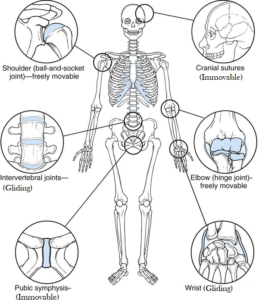
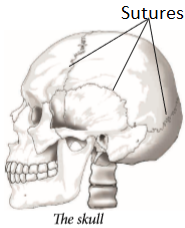
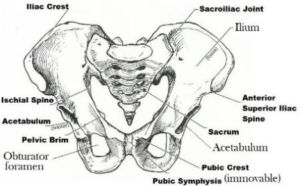
(a) Immovable joint e.g. fused bones in the skull and the pelvic girdle.
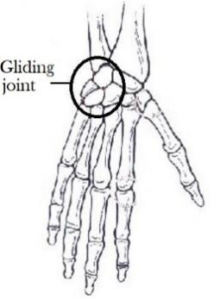
(b) Gliding joint e.g. at the wrist, ankle and between vertebrae in the vertebral column.
(c) Movable joints
Immovable Joints (Fixed Joints)
There is no movement between the bones of the joint.
Example: joints between the fused bones of the cranium and the pelvic girdle.
Gliding Joints
Found between short bones that glide over each other producing some movement.
Example: joints between carpals, tarsals and vertebrae.