Inheritance of Rhesus Factor
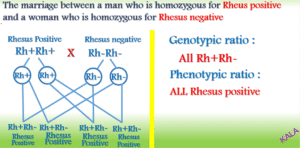
In humans, the possession of Rhesus antigen makes one Rh+ (Rhesus positive) while absence of Rhesus antigen makes one Rh- (Rhesus negative). The presence of Rh antigen is due to a dominant gene which is dominant over the gene for its absence.
If one of the parents is Rh+ then all the children will be Rh+. Rh- children will only result if both parents are Rh-.
If blood from a Rhesus positive (Rh+) person is transfused into a person without the Rhesus factor, the recipient produces antibodies against the Rhesus factor of the donor. This causes agglutination of the red blood cells of the recipient.
If a woman who is rhesus negative is married to a rhesus-positive man, when she becomes pregnant the child will be Rhesus positive. Rhesus antigen can cross the placenta into the mother’s bloodstream prompting the mother’s immune system to produce Rhesus antibodies. When antibodies get into the foetal circulation, an antigen-antibody reaction takes place and the Red blood cells of the foetus is destroyed (haemolysed). In the second pregnancy, the amount of antibodies are more and cause a lot of damage to the foetal red blood cells, resulting in death. This is called Haemolytic disease of the new born (Erythroblastosis foetalis).