Tropisms
It is growth response to a unidirectional stimulus.
Tropic movements are shown by growth curvatures of plant parts controlled by hormones called auxins.
The response is either positive (towards a stimulus) or negative (away from a stimulus).
The various types of tropisms are named according to the stimulus involved. These include;
- Phototropism (light)
- Geotropism (gravity)
- Chemotropism (chemicals)
- Hydrotropism (water)
- Thigmotropism (Haptotropism)- (contact)
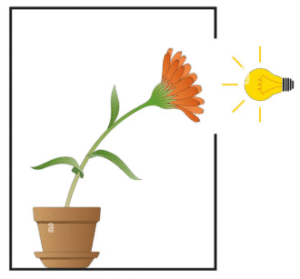
Phototropism – Growth curvature in response to the direction and intensity of light.
Example; shoots are positively phototropic while roots are negatively phototropic.
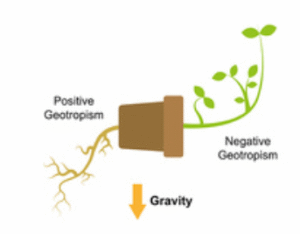
Geotropism – Growth curvature in response to gravity.
Example; roots are positively geotropic while shoots are negatively geotropic.
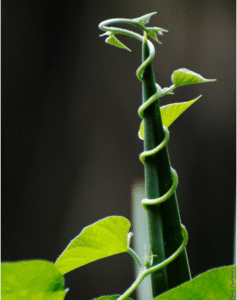
Thigmotropism (Haptotropism) – Growth curvature in response to contact with a solid object.
Examples; tendrils or climbing stems twine around objects e.g. branches and stems. Roots tips show negative thigmotropism when they grow avoiding solid obstacles such as rocks.
Chemotropism – Growth curvature in response to a gradient of chemical concentration.
Example; growth of pollen tube towards chemicals secreted by the embryo sac.
Hydrotropism – Growth curvature in response to water or moisture.
Plant roots are positively hydrotropic.
Survival Value of Tropic Responses
- Phototropism exposes the leaves in position to maximize light absorption hence enhance photosynthesis.
- Hydrotropism enables the roots of the plants to seek water.
- Haptotropism enables plants to obtain mechanical support, especially in plants lacking woody stems.
- Geotropism enables plant roots to grow deep into the soil thus offering firm anchorage to the plant.
- Chemotropism enables the pollen tube to grow towards the embryo sac thus facilitating fertilisation.