Comparative Anatomy
Comparison of the body forms and structures of different organisms shows some basic structural similarities. This suggests that the organisms have a related or common ancestry. Example, feet and ears of gorilla are similar to those of humans.
(a) Divergent evolution
It is where structures that have a common embryonic origin are modified to perform different functions. This enables them to exploit different ecological niches, giving rise to another evolutionary phenomenon called adaptive radiation.
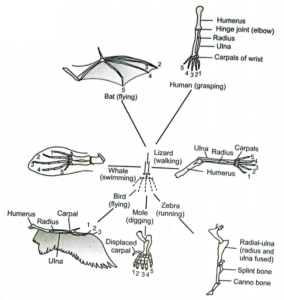
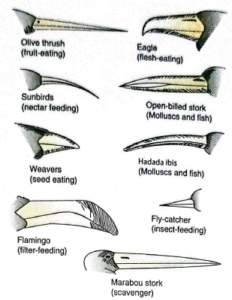
Homologous structures – are structures of organisms that have common embryonic origin but are modified to perform different functions.
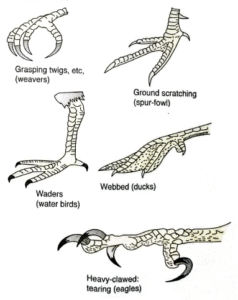
Examples; pentadactyl limb of vertebrates, beaks in birds, feet in birds are modified to perform different functions.
|
Structure |
Animal |
Function |
Ecological niche |
|
(a) Forelimb |
Bat (wing) |
Flying |
Air |
|
Man (forearm) |
Grasping |
Aquatic and terrestrial |
|
|
Lizard (foreleg) |
Walking |
Terrestrial environment |
|
|
Whale (fin) |
Swimming |
Aquatic environment |
|
|
Bird (wing) |
Flying |
Air |
|
|
Mole (foreleg) |
Digging |
Soil |
|
|
(b) Beaks in birds
|
Olive (thrush) |
Fruit-eating |
Fruits |
|
Sun bird |
Nectar feeding |
Flowers |
|
|
Weaver bird |
Seed-eating |
Cereal plants |
|
|
Flamingo |
Filter-feeding |
Water plants |
|
|
Eagle |
Flesh-eating |
Animals |
|
|
(c) Feet in birds |
Weaver bird |
Grasping birds |
Trees |
|
Water bird |
Wading |
Water |
|
|
Eagle |
Grasping, tearing |
Ground or air |
|
|
Domestic fowl |
Ground scratching |
Soil |
|
|
Duck (webbed) |
Swimming |
Water |
Pentadactyl limbs in vertebrates
Beaks in birds
Feet in birds
(b) Convergent evolution
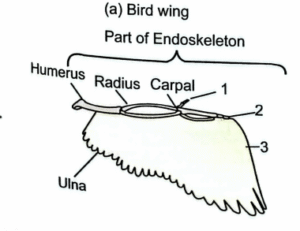
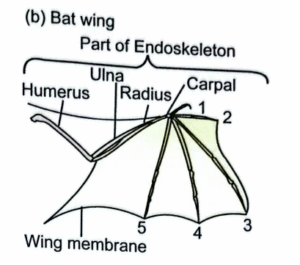
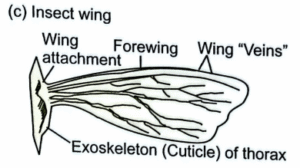
It is where structures that have different embryonic origin are modified to perform same function.
Analogous structures – are structures of organisms that have different embryonic origin but modified to perform same functions.
Examples;
- Bird and insect wings are used for flying.
- Human and octopus (mollusk) eyes are used for sight.
(c) Vestigial structures
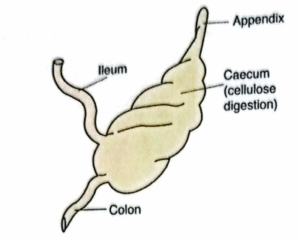
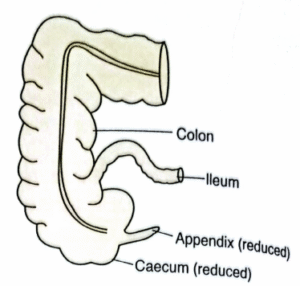
Vestigial structures- structures that have over a long of time ceased to be functional and therefore have become reduced in size or are rudimentary.
Examples;
- Appendix in man
- Tail in man which is in form of a reduced coccyx.
- Nictating membrane in mammals is now reduced and functionless
- Reduced wings in kiwi (flightless).
- Pelvic girdle in python and whale.