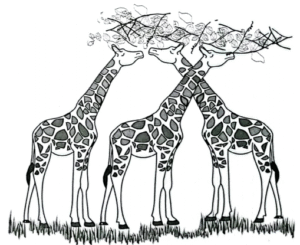
Darwin’s Theory of Natural Selection
Suggests that “In nature there occur struggle for existence due to environmental pressure. In a population, there exists variations; favourable (advantageous) and unfavourable (disadvantageous) variations. Only those individuals with favourable (advantageous) variations survive to maturity, reproduce and transmit the favourable (disadvantageous) variations to their offspring. Individuals with unfavourable variations fail to compete, do not reproduce and die before maturity, they become extinct. Nature selects individuals that are well adapted hence survival of the fittest.”
Charles Darwin based his explanation on a concept he called “Natural selection”. His arguments were documented in his book; Origin of Species (1859) whose main features are the following observations:
1. Existence of variations
Variations always exist within members of a population. These variations arise by chance from within the individual and may be advantageous (favourable) or disadvantageous (unfavourable) to the individual. Through sexual reproduction, they are transmitted to successive offspring.
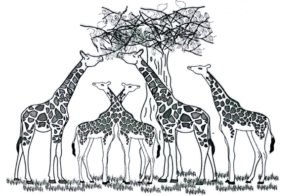
2. Struggle for existence
The number of offspring outnumber by far the parental generation but only a few survive to adulthood. Population growth is repressed by environmental pressures like; predation, diseases, parasites and food shortage.
Therefore, the numbers of a population remain relatively constant. This means that members of the population are constantly competing in an effort to survive; struggle for existence.
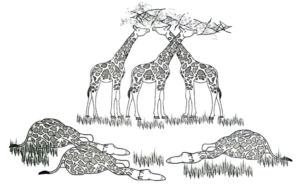
3. Survival of the fittest
Those individuals with advantageous (favourable) variations and are well adapted to the environment manage to survive, reach maturity and reproduce; survival of the fittest.